The Cult of Inevitability
What does thinking mean when the winds are intelligent?
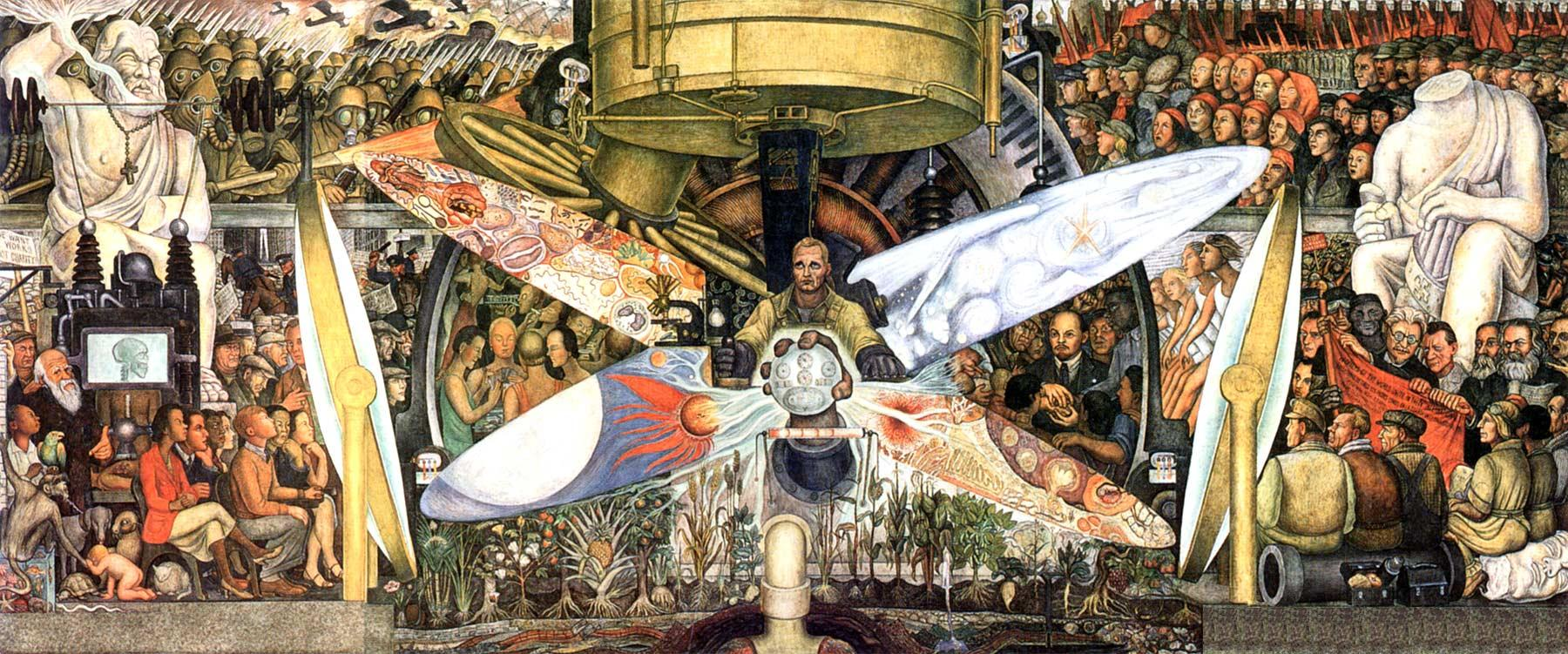
Necessity
The Universe emerged from a singularity so compressed and volatile that it is difficult to imagine it as anything other than a manifestation of necessity. This gave way to a quiet settling: heat bleeding away, particles finding arrangements that the laws of nature allowed. Protons, neutrons, hydrogen, helium - none chose their roles. They formed because they had no other option.
The natural constants we now treat as fixed were never debated, never negotiated; they simply held, and matter learned to behave within their limits. In that early chemistry there was less grandeur than inevitability, a slow establishment of the terms under which everything since has unfolded.
Unlike the early Universe, which followed a script set to the tune of non-negotiable physical constraints, our sociotechnical systems are contingent - but we often misinterpret them as if they followed the same inescapable logic.
The trickle
We tend to imagine the future as another singularity, waiting for it to arrive like a storm front; rehearsing for the moment with such anticipation that our ears are finely tuned to listen for the thunder. But history prefers the trickle to the tempest. An increase in humidity, a cool darkening of the skies. The new world enters as condensation on the inside of yesterday’s window. Artificial intelligence isn’t a storm, it’s a climate. It wets our peripherals.
What does thinking mean when the winds are intelligent? Our sense of agency tempts us with the idea of choice. The more tools within reach, the more free we must be. But are we free to create, or free to curate? How do we outrun lethargy when our first drafts are never the first anymore? When adequacy is outsourced, and the knowledge curve is flattened? Frequently we find that abundance slumps to hesitance. Faced with too many paths, we begin to mistake what we inherited for what is inevitable.
Agency in the age of AI is the art of manoeuvring one’s attention through systems that anticipate desire. Once the system learns the contour of your appetite, agency is the quiet pluck of changing its topology. It isn’t loud, nor signposted. It’s a reflex.
Inheritance or inevitability?
When privilege is allocated to what can be empirically measured, predicted, and controlled, interior life and meaning is downgraded as side effects of the material world. Experience, when treated as epiphenomenal, leads to the machine presenting its architecture as natural law. As a result, it makes it easier to present large-scale systems as a consequence of impersonal forces, rather than contingent political choices.
The Cult of Inevitability emerges from our tendency to take the genuine inevitability of physics and smuggle its aura into our everyday domains that are in fact saturated with granularity and agency. We borrow the rhetorical certainty of nature to absolve ourself of ambiguity, conflict, or responsibility. Stories of the impending pale blue glow are frequently dispensed with this cadence, and speculation calcifies into destiny.
Where speculation genuinely exists, Pascalian wagers fill the gap. Existential stakes and cosmic bets that demand compliance. This wager functions as a psychological technology, transforming open futures into closed ones through self fulfilling prophecies. However, inheritance and inevitability are not the same. The Cult of Inevitability thrives on that confusion. To dissolve it, we must learn to distinguish between forces that cannot be altered and systems that merely convince us they are unalterable. This is where agency re-enters - not as a grandiose freedom, but as the subtle reflex of discerning where necessity ends and choice begins.
Revising the poem
Every civilisation writes a poem about itself and mistakes it for its fate. The model isn’t inventing a new ideology; it’s a very obedient poet, rhyming with the civilisation that trained it. Its outputs reflect the stories we have normalised, the structures we have accepted, and the inevitabilities we have manifested. If we wish to alter the rhyme, we must revise our poem - not wait for inevitability to revise itself.